201687 minDocumentary
On the Track of Robert van Gulik
Robert van Gulik (1910–1967) served as a diplomat, collected Chinese lutes and invented Judge Dee, yet his own country barely remembers him. Rob Rombout travels from the Netherlands to Indonesia, Japan, the United States and China, through diaries, archives and the people van Gulik still haunts. Somewhere between biography and detective story, the man and his hero merge.
More excerpts
Press
“Far from a biopic, more a free-ranging fantasy”
“reality smoothly passes into fiction”
- 2022On the Track of Robert van GulikManuel João Montenegro, Cinemateca Portuguesa · PDF ↗
- 2022A composite portraitMarc-Emmanuel Mélon, The Mise en Scène of the Real, Yellow Now, provisional translation · PDF ↗
Photographs
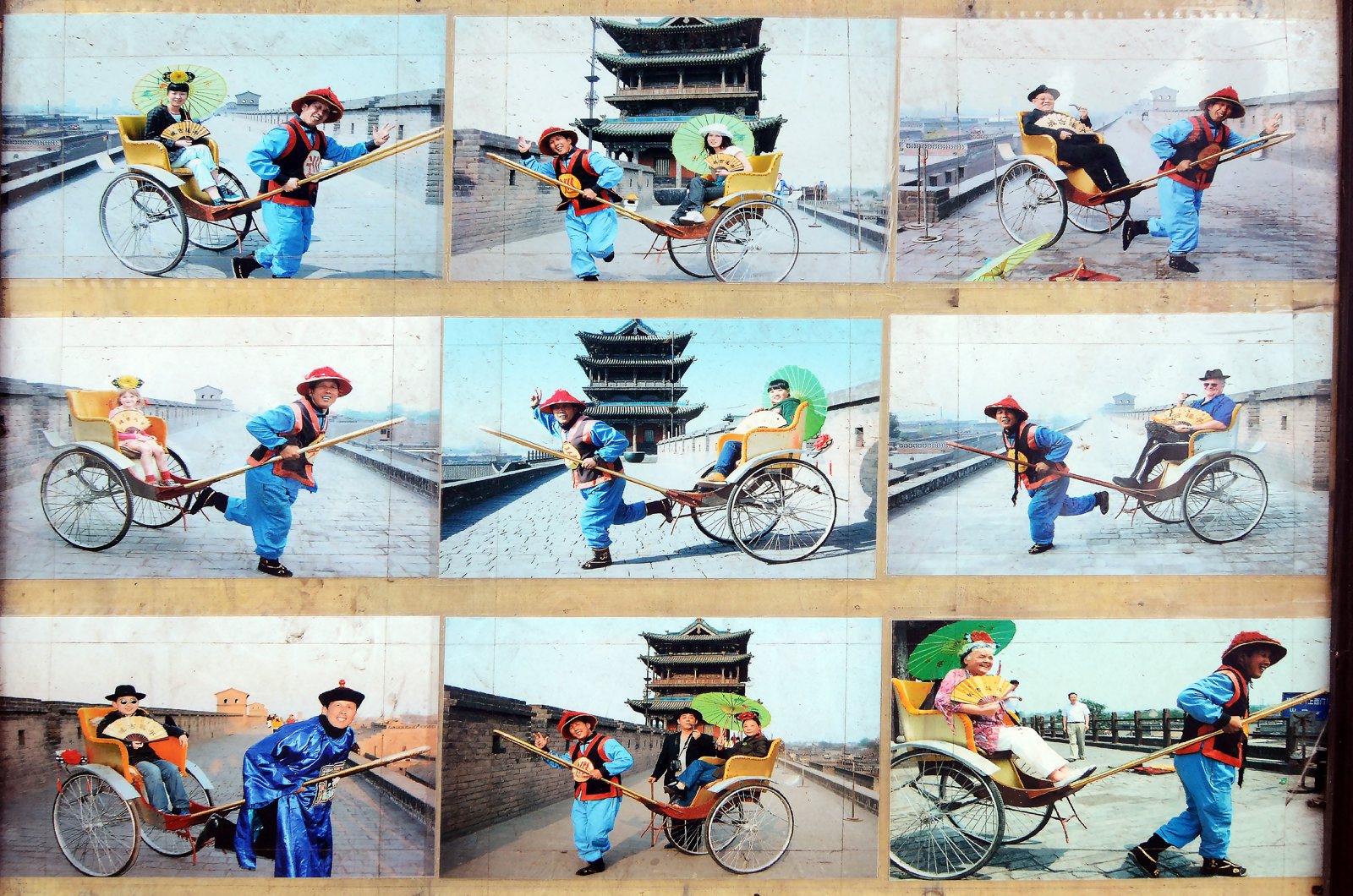
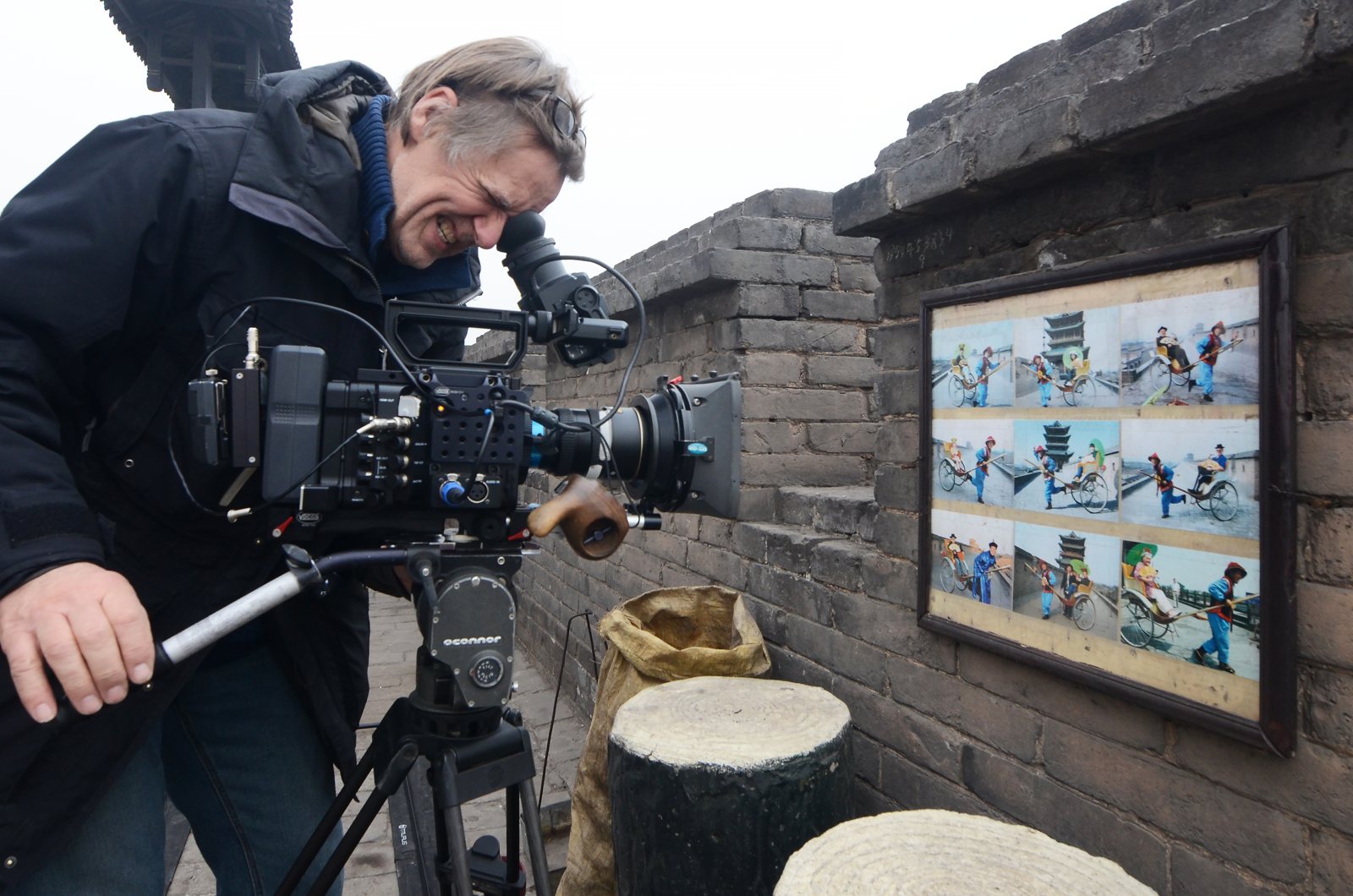
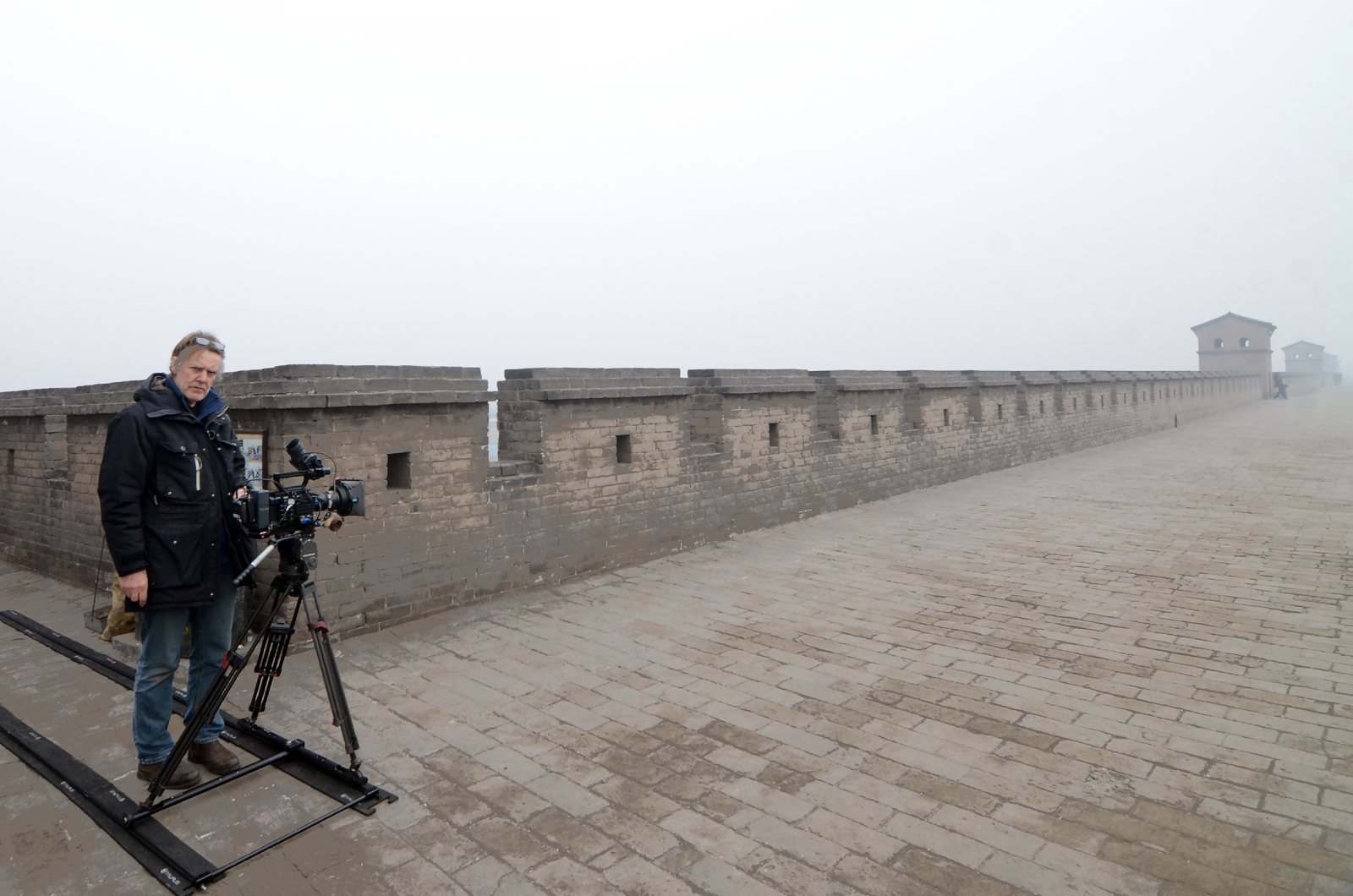






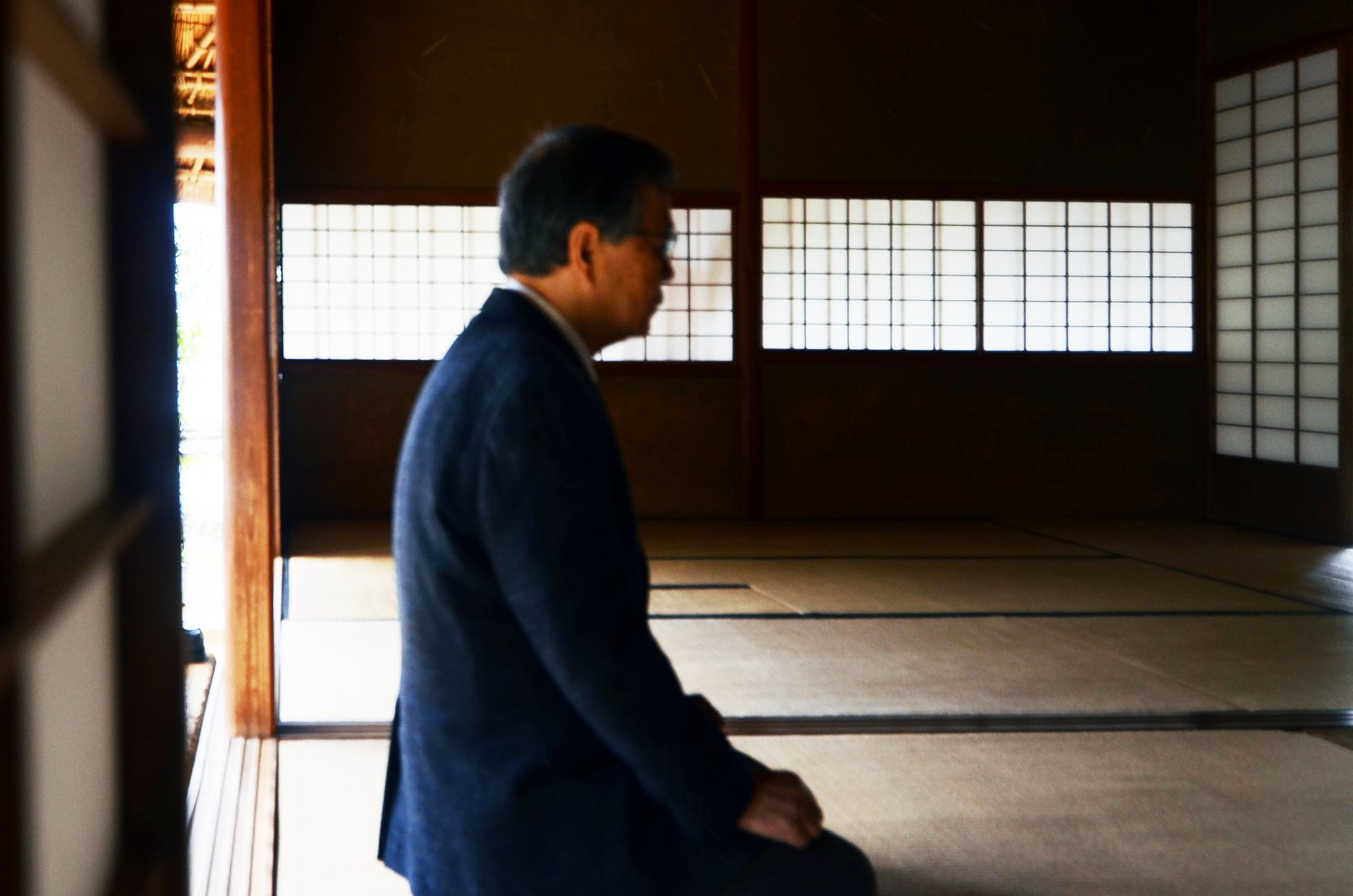


Technical sheet
- Title
- On the Track of Robert van Gulik
- Year
- 2016
- Runtime
- 87 min
- Countries
- Belgium, Netherlands
- Languages
- English, Dutch, French, Chinese, Japanese
- Production
- Off World, co-produced with Zeppers Film & TV
- Availability
- Library and non-commercial screening licence available
- Versions
- 87′ in the credits published in Mélon 2022. Some programmes list 2015 (completion) or 88′. A Dutch version exists (Mélon 2022, p. 239).
- Direction and script
- Rob Rombout
- Image
- Stef Tijdink, Benjamin Wolf, Stefano Bertacchini, Tareck Raffoul
- Editing
- Adriana Moreira de Oliveira, Miguel Cipriano dos Reis
- Sound design
- Rainier Buidin, Guillaume Berg
- With
- Marie-Anne Souloumiac-van Gulik, Arthur Japin, Wilt Idema, Frédéric Lenormand, Henry Wessells, John Thompson
Selections
- 2016Netherlands Film Festival, Utrecht
- 2019Mois du doc, Heure Exquise!
Transcripts
▶ 01 1942–2016 · 4′38″
Après l'attaque de Pearl Harbor, Robert van Gulik est obligé de quitter le Japon. Il débarque au Mozambique. D'après ses dires, c'est à partir de ce moment qu'il a commencé à travailler comme espion pour les services secrets britanniques.
After the attack on Pearl Harbor, Robert van Gulik has to leave Japan. He lands in Mozambique. By his own account, it was from that moment that he began working as a spy for the British secret service.
« Le 27 août, j'arrive à Lourenço Marques. Je pense qu'il vaut mieux que je ne reste pas dans le luxueux hôtel Polana où vont les autres diplomates. Je savais que c'était un centre d'espionnage et j'ai toujours détesté les hôtels luxueux. Donc je prends une chambre dans la première pension chinoise que je vois.
"On 27 August I arrive in Lourenço Marques. I think it is better not to stay in the luxurious Polana hotel where the other diplomats go. I knew it was a centre of espionage, and I have always hated luxurious hotels. So I take a room in the first Chinese boarding house I see.
La propriétaire énormément grasse me propose de me donner des cours de portugais. Elle me présente trois pensionnaires qui travaillent comme hôtesses dans le casino : deux filles françaises plutôt fanées et une mulâtresse plutôt jolie aux yeux noirs énormes.
The enormously fat landlady offers to give me Portuguese lessons. She introduces me to three boarders who work as hostesses in the casino: two rather faded French girls and a rather pretty mulatto woman with enormous black eyes.
Les Alliés m'ont ordonné de monter à bord du bateau du Nil et d'essayer de découvrir pourquoi exactement la princesse de la cour égyptienne s'était rendue dans le sud et quelles étaient ses idées sur la situation en Égypte.
The Allies ordered me to board the Nile boat and try to find out exactly why the princess of the Egyptian court had gone south and what her views were on the situation in Egypt.
J'ai constaté que la princesse et sa suite n'étaient que des gens effrayés sans plans subversifs. Quand mon travail en Égypte fut terminé, on m'ordonna d'aller à New Delhi. Je quitte Le Caire le 14 janvier en avion. »
I found that the princess and her retinue were only frightened people with no subversive plans. When my work in Egypt was finished, I was ordered to go to New Delhi. I leave Cairo on 14 January by plane."
“Meneer Van Gulik is getrouwd met Chu Chi Fang, de dochter van de laatste mandarijn”, zei mijn moeder toen ze mij die avond naar bed bracht. En omdat ik maar door bleef vragen, vertelde ze verder over Van Guliks schoonvader, die een hoge ambtenaar van de Chinese keizer was geweest.
"Mr Van Gulik is married to Chu Chi Fang, the daughter of the last mandarin," my mother said when she put me to bed that evening. And because I kept on asking, she went on telling me about Van Gulik's father-in-law, who had been a high official of the Chinese emperor.
“Hij had zijn eigen trein met 20 wagons. Daarmee reisde hij door China. Wat zeg ik, door heel Azië. Er was een eetzaal achter het locomotief en een balzaal en een bibliotheek en slaapkamer voor zijn personeel. Alleen al voor de keukenwagen had hij 25 man.”
"He had his own train with 20 carriages. He travelled through China in it. What am I saying, through all of Asia. There was a dining room behind the locomotive, and a ballroom, and a library, and bedrooms for his staff. For the kitchen car alone he had 25 men."
En 1942, Robert van Gulik arrive à Chongqing, capitale de la Chine libre de l'époque. Il est nommé premier secrétaire de l'ambassade néerlandaise.
In 1942 Robert van Gulik arrives in Chongqing, the capital of Free China at the time. He is appointed first secretary of the Dutch embassy.
À Chongqing, 70 ans plus tard, je retrouve encore un témoin de cette époque. Une dame centenaire, Madame Yun Bi Fu. Elle me parle d'une rencontre mémorable avec Robert van Gulik, Gao Luopei, en présence de son mari, Monsieur Su.
In Chongqing, 70 years later, I still find a witness from that time. A woman of a hundred, Madame Yun Bi Fu. She tells me about a memorable meeting with Robert van Gulik, Gao Luopei, in the presence of her husband, Mr Su.
Transcribed from the sound of the excerpt and edited; English translations are ours.
▶ 02 Frédéric Lenormand · 7′08″
Frédéric Lenormand : Quand j'étais adolescent, j'ai lu tous les Van Gulik qui paraissaient. Et quand je l'ai eu terminé, je me suis dit : « Mais c'est fini ? Il n'y a plus de juge Di à lire, le juge Di est mort ? » Je me suis dit : « Ce n'est pas possible, il faut en écrire d'autres. »
Frédéric Lenormand: When I was a teenager I read all the Van Guliks as they came out. And when I had finished it, I said to myself: "But is that it? There is no more Judge Dee to read, Judge Dee is dead?" I said to myself: "That's not possible, others have to be written."
J'ai fait 19 enquêtes du juge Di et maintenant, je sais écrire des romans policiers grâce à Van Gulik.
I have done 19 Judge Dee investigations, and now I know how to write detective novels thanks to Van Gulik.
On est parti du même modèle qui est le magistrat chinois qui a trois femmes, qui va dans les mêmes villes, qui a les mêmes lieutenants, qui font les enquêtes pour lui. Mais Van Gulik représente Monsieur Van Gulik, qui mène une enquête sous les Tang avec tout son côté fonctionnaire, diplomate, sérieux, qui étudie la calligraphie. Et moi, j'ai fait quelqu'un de plus misanthrope, qui est peut-être plus maigre, qui est très embêté d'être là, d'être juge. Il est forcé parce qu'il faut bien faire quelque chose.
We started from the same model, the Chinese magistrate who has three wives, who goes to the same towns, who has the same lieutenants who carry out the investigations for him. But Van Gulik portrays Mr Van Gulik, conducting an investigation under the Tang, with his whole civil-servant, diplomat, serious side, someone who studies calligraphy. And I made someone more misanthropic, perhaps thinner, who is very annoyed to be there, to be a judge. He is forced into it because one has to do something.
Lui, il a mis beaucoup de prostituées dans ses livres. Moi, les prostituées, ça ne m'intéresse pas du tout. Ce qui m'intéresse, c'est de savoir comment une femme peut être l'épouse du juge Di à la période des Tang et quand même avoir une vie alors qu'il lui a mis deux concubines à la maison, qu'il faut faire des enfants, des fils, qu'il faut être en représentation, qu'il ne faut pas se montrer parce que la femme noble des Tang, on ne devait pas voir son visage, elle n'allait pas faire son marché. J'aime bien relever ce défi-là. Que peut faire madame Di ?
He put a lot of prostitutes in his books. Prostitutes don't interest me at all. What interests me is how a woman can be Judge Dee's wife in the Tang period and still have a life, when he has put two concubines in the house for her, when she has to have children, sons, when she has to keep up appearances, when she must not show herself, because a noble Tang woman's face was not to be seen, she did not go to the market. I like taking up that challenge. What can Madame Dee do?
Ce sont beaucoup les femmes qui lisent la littérature en général et le juge Di en particulier. Je voulais leur offrir une enquête où madame Di mènerait l'enquête à la place de son mari. Dans ce livre-là, le juge Di est victime d'un attentat au premier chapitre, il se casse la jambe et pour trouver son assassin, il est obligé de demander à sa première épouse d'aller interroger les gens à sa place et puis il lui donne des conseils sur son lit. C'est une revanche de la femme sur l'enquêteur.
It is largely women who read literature in general and Judge Dee in particular. I wanted to offer them a case in which Madame Dee would lead the investigation instead of her husband. In that book, Judge Dee is the victim of an attack in the first chapter, he breaks his leg, and to find his would-be murderer he has to ask his first wife to go and question people in his place, and he gives her advice from his bed. It is the woman's revenge on the investigator.
« Les demoiselles étaient nourries de contes et de poèmes où l'amour triomphait le plus souvent. Et même s'il menait les amoureux à leur perte, du moins avait-il le mérite d'avoir existé. Il en allait tout différemment de l'union conjugale à laquelle elles étaient vouées sans que quiconque eût pris la peine de les consulter. Le mariage était un malentendu tragique entre deux personnes qui n'avaient guère de chance de se comprendre, deux êtres que leur éducation avait tout fait pour éloigner plus encore que la nature ne les y avait disposés. Elle comprit alors que c'était à elle-même qu'elle était en train de penser. »
"Young ladies were raised on tales and poems in which love most often triumphed. And even if it led the lovers to their ruin, at least it had the merit of having existed. It was quite different with the marriage to which they were destined without anyone having taken the trouble to consult them. Marriage was a tragic misunderstanding between two people who had little chance of understanding each other, two beings whom their upbringing had done everything to drive further apart than nature had already inclined them. She then understood that it was herself she was thinking of."
Pour l'écrire, j'ai été obligé d'étudier ce qu'avait fait Van Gulik. Donc, en même temps, j'ai appris à écrire des romans policiers, ce qui consiste à mentir au lecteur pendant le plus longtemps possible dans le livre.
To write it, I had to study what Van Gulik had done. So at the same time I learned to write detective novels, which consists of lying to the reader for as long as possible in the book.
C'est ça qui rend les romans du juge Di particulièrement originaux si on les replace bien dans l'époque Tang, qui est le seul moment où la Chine a été gouvernée par une femme qui a réussi à se faire couronner empereur. Non pas impératrice, mais empereur. Elle était, elle, le fils du ciel. Donc elle a fait déclarer qu'elle était la réincarnation du Bouddha. « Si je suis le Bouddha, je ne suis pas une femme et vous devez m'obéir. » C'était magnifique.
That is what makes the Judge Dee novels particularly original, if you place them properly in the Tang era, the only time China was ruled by a woman who managed to have herself crowned emperor. Not empress, but emperor. She herself was the Son of Heaven. So she had it declared that she was the reincarnation of the Buddha. "If I am the Buddha, I am not a woman, and you must obey me." It was magnificent.
Elle s'est fait couronner empereur 60 ans passés après avoir tué tous les gens qu'il fallait dans la cour, y compris les fils de son mari, ses propres fils, les impératrices, tout le monde. C'est peut-être une sorte de Mao Tsé-toung femme, mais quelle brillante réussite.
She had herself crowned emperor past the age of 60, after killing everyone who needed killing at court, including her husband's sons, her own sons, the empresses, everyone. She is perhaps a sort of female Mao Zedong, but what a brilliant success.
La plupart des écrivains français de polars écrivent avec leur pied gauche. C'est à la fois apprécié comme genre et souvent, ce n'est pas de la littérature.
Most French crime writers write with their left foot. It is appreciated as a genre, and at the same time it is often not literature.
Le problème de Van Gulik, c'est que c'était quelqu'un de très original et qui ne se préoccupait pas de faire des choses qui entrent dans des cases prédéfinies. Je pense que c'est ça qu'on lui reprochait et qu'on reproche à tous les gens qui sont originaux. Il ne faisait pas de la littérature ni du roman policier, il faisait du Van Gulik.
The problem with Van Gulik is that he was a very original person who did not care about doing things that fit into predefined boxes. I think that is what he was blamed for, and what all original people are blamed for. He wasn't writing literature or detective fiction, he was writing Van Gulik.
Je ne sais pas si ça plairait à Van Gulik, ce que je suis en train de dire. Peut-être que lui, ce qui l'intéressait, c'était juste ce magnifique mécanisme d'horlogerie qui tombait parfaitement juste. L'heure de Van Gulik était toujours juste. C'est peut-être en ça que je suis différent et que le juge Di est toujours moderne, qu'on peut toujours prendre le juge Di et raconter des choses différentes, parler de problèmes différents, toujours avec ce même personnage. Il peut servir à toutes les époques.
I don't know whether Van Gulik would like what I am saying. Perhaps what interested him was just that magnificent clockwork mechanism that fell perfectly into place. Van Gulik's clock was always right. Perhaps that is where I am different, and why Judge Dee is still modern: you can always take Judge Dee and tell different stories, talk about different problems, always with the same character. He can serve in every era.
Transcribed from the sound of the excerpt and edited; English translations are ours.
▶ 03 Odawara, Japan · 2′42″
Robert van Gulik vivait en grande partie dans un monde créé par lui-même. Un monde quelque part entre l'Extrême-Orient et les Pays-Bas, entre la dynastie des Tang et le XXe siècle.
Robert van Gulik lived largely in a world of his own making. A world somewhere between the Far East and the Netherlands, between the Tang dynasty and the 20th century.
En 1936, pendant son séjour au Japon, dans la station thermale de Odawara, il écrit son premier recueil de poésie.
In 1936, during his stay in Japan, in the hot-spring resort of Odawara, he writes his first collection of poetry.
Près de 80 ans plus tard, je retrouve le même ryokan traditionnel, à la même apparence, avec le même agencement et le même rite.
Nearly 80 years later, I find the same traditional ryokan, with the same look, the same layout and the same ritual.
We sit down on the silk floor cushions a sedately dressed maid has placed on the spotless mats. Then we taste the fragrant tea she pours out in the beautifully lacquered tea bowls. Then, after the list of fragrant names, the guest book has been duly filled in and the maid has noiselessly retired. I hear now for the first time the soft murmur of the hot springs.
There is a chaste intimacy about the shared bath. Here, a hoary tradition links bathing with ritual cleansing. And though according to the ancient custom men and women bathe together completely naked, in the bathroom the nude is seen but not looked at, and there is no thought of amorous dalliance.
As we are lying there motionless, I am grateful for your blessed gift of silence. The drops in your blue-black tresses are like so many pearls.
Transcribed from the sound of the excerpt and edited; English translations are ours.
▶ 04 Boston, New York · 4′52″
L'auteur laisse une piste, peut-être une indication, une intrigue dans laquelle le maître en personne tient le premier rôle.
The author leaves a trail, perhaps a clue, a plot in which the master himself plays the leading role.
Ma quête ressemble de plus en plus à une enquête issue d'un roman policier mis en scène par l'auteur.
My quest looks more and more like an investigation out of a detective novel staged by the author.
Que reste-t-il finalement de Robert van Gulik et son alter ego, le juge Di, le légendaire Di Renjie ?
What is left, in the end, of Robert van Gulik and his alter ego, Judge Dee, the legendary Di Renjie?
À Boston se trouve un homme qui porte le même nom, Mister Di.
In Boston there is a man who bears the same name, Mister Di.
I came to the United States in 1987. Back then, my mind was kind of set on: "Well, I am an immigrant. I am going to join the mainstream here." I would give up Chinese language for the moment and devoting myself in learning English. But then one day when I read a novel about Judge Di written by Van Gulik, I suddenly felt like: "Wow, this character or these characters depicted in his stories feel so close to me, so familiar, and make me laugh and want to cry and all that stuff." It is just so close, so Chinese.
The readers of Van Gulik's novel should have a pretty good understanding or new understanding about Chinese society and culture and history. And that is something that a normal detective story does not carry such kind of task. So the new readers of my book, even if they haven't read any Van Gulik stories, just from my single volume book called Tales of Judge Di, they can learn as much about Chinese culture and society and history.
I would like to use my pen only as a beginner, and Van Gulik is a great master. I am just a student following his footsteps.
The judge's office was adjacent to the court hall, separated from the lady's quarters. The two buildings were connected through a narrow corridor with a tiled roof. If the judge had wanted to join one of his wives, he had to walk through the corridor, likely to be noticed by the servants in the main kitchen. Not wanting to alarm anyone unnecessarily or to disturb the preparation of his dinner, Judge Di decided to stay in his office with his confidential advisor, Sergeant Hung Liang.
400 kilomètres plus loin, à Hoboken, juste en face de Manhattan, je rencontre John Thompson. Comme Robert van Gulik, John a été espion, mais pour la CIA, au Vietnam. 40 ans plus tard, il est un des rares joueurs restants de qin ou de luth, ainsi que Van Gulik nommait cet instrument.
400 kilometres further on, in Hoboken, just across from Manhattan, I meet John Thompson. Like Robert van Gulik, John was a spy, but for the CIA, in Vietnam. Forty years later he is one of the few remaining players of the qin, or lute, as Van Gulik called the instrument.
John Thompson: I don't know that I would say that I strive to be like Van Gulik. I think it would be presumptuous of me to compare myself to Van Gulik.
When I went to Vietnam and I was not in combat, I was wearing civilian clothes, living in towns usually. And I had a chance to interact with normal Vietnamese people. And I was basically embarrassed that I didn't know anything about this area where I was living. So I started reading books, and at the military base, I found this book, Lore of the Chinese Lute by Van Gulik.
Transcribed from the sound of the excerpt and edited; English translations are ours.